The Pyramid of Marathon Training
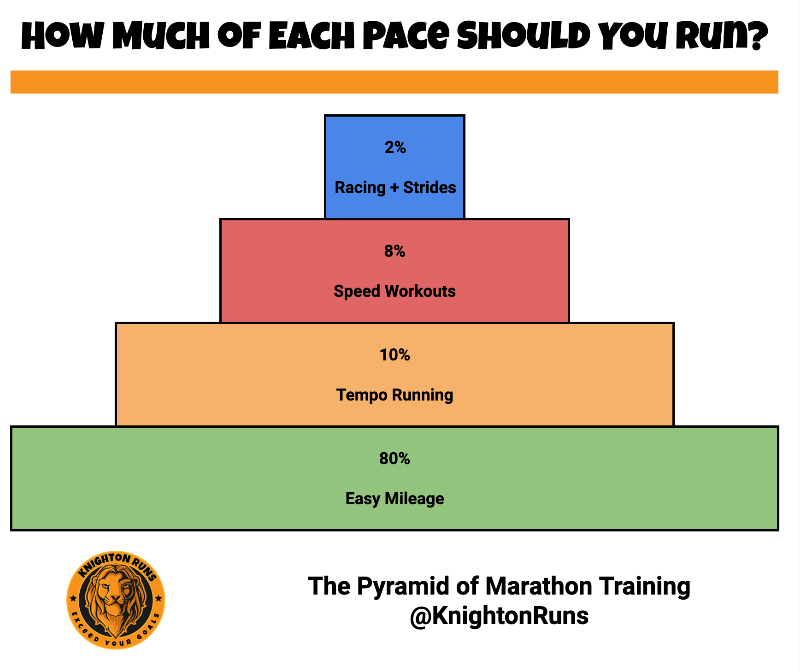
Do you have enough variation in your weekly running?
Effective marathon training can be thought of like building a pyramid. Each layer supports the training that comes above it.
You can’t expect to consistently perform well in the faster, more demanding layers of training without first building a strong aerobic foundation. When you build from the ground up, however, each type of training becomes more effective.
Quick Answer: What Is the Pyramid of Marathon Training?
Effective marathon training can be thought of as a pyramid. The largest layer is easy aerobic running, which supports progressively smaller amounts of tempo and threshold running, faster workouts, strides, and racing.
Each level of the pyramid uses different training paces and intensities.
The exact balance will vary from runner to runner, but the principle is simple: build a strong aerobic foundation first, then layer faster and more specific training on top.
- Easy Mileage — the aerobic foundation of your training
- Tempo and Threshold Running — sustained faster aerobic running
- Speed Workouts — faster intervals that develop speed and running economy
- Racing and Strides — small amounts of your fastest running
The right balance of easy mileage, faster running, and race-specific work is different for every athlete. Through my online running coaching, I help runners build that balance around their individual strengths, goals, and recovery.
Watch: The Pyramid of Marathon Training Explained
Layer 1 – Easy Mileage
Easy running forms the foundation of marathon training. For most runners, the majority of weekly mileage should be completed at a comfortable, conversational effort.
Consistent aerobic mileage helps build the endurance and durability needed to support the harder training that comes later. As your body adapts, mileage can be increased gradually based on your experience, goals, available training time, injury history, and ability to recover.
The exact percentage of easy running will vary depending on the runner and the phase of training. The important principle is that easy running should make up the largest portion of your overall training.
If you are working on developing this foundation, learn more about base building for runners and how to safely increase your running mileage.
Layer 2 – Tempo and Threshold Running
Tempo and threshold running are important tools for marathoners because they develop your ability to sustain faster aerobic efforts for longer periods of time.
Depending on the phase of training, these workouts may range from shorter threshold efforts to longer sustained segments closer to marathon pace.
As you move through a marathon training cycle, the purpose of these workouts can change. Earlier workouts may emphasize faster aerobic development, while later sessions become increasingly specific to the demands of your goal race.
Tempo and threshold training should complement your aerobic foundation rather than replace it. The majority of your weekly running should still remain easier.
Learn more about race-specific training for marathoners.
Layer 3 – Speed Workouts
Marathoners can benefit from running substantially faster than marathon pace during certain phases of training.
Faster interval workouts can improve running economy, speed, coordination, and comfort at quicker paces. Workouts around approximately 5K to 10K effort can develop qualities that easy mileage and marathon-pace running alone do not fully address.
Speed work should make up a relatively small portion of your overall training and should be balanced with enough easy running and recovery to absorb the workout.
An example speed workout for an experienced runner might be 5 x 1000m at approximately 5K-10K effort with a 400m easy jog recovery. The specific workout, volume, and pace should depend on the athlete’s experience, fitness, and current phase of training.
Learn more about speed development for marathoners.
Layer 4 – Racing and Strides
The smallest layer of the pyramid includes some of your fastest running: strides and racing.
Only a small percentage of your total running needs to occur at these faster efforts, but touching faster speeds can help reinforce good mechanics, coordination, and comfort running quickly.
Short strides once or twice per week can be useful during many phases of marathon training. The appropriate frequency depends on the runner and the rest of the training week.
One simple example is:
- 4 x 20-second strides
- Run fast but relaxed rather than sprinting all-out
- Take approximately 60 seconds of easy jogging or walking between repetitions
Occasional shorter races can serve a similar purpose by allowing marathoners to practice competing and running at faster intensities without making those efforts a large part of weekly mileage.
The Exact Training Balance Is Different for Every Runner
The pyramid is a framework, not a rigid formula.
The appropriate balance of easy running, tempo work, speed development, strides, and racing depends on factors such as your experience, current fitness, mileage, race goals, injury history, available training time, and ability to recover.
It will also change throughout your marathon training cycle. You do not need to perform the same combination of workouts every week of the year.
How the Pyramid Fits Into the Six Phases of Marathon Training
The Pyramid of Marathon Training describes the different types of running that make up marathon preparation, while my Six Phases of Marathon Training framework explains how the emphasis on those training types changes throughout a marathon cycle.
During base building, easy mileage dominates. During speed development, faster running becomes more important. As the marathon approaches, race-specific workouts and marathon-pace running take on a larger role before training volume decreases during the taper.
Together, these two frameworks provide a simple way to understand both what belongs in marathon training and when to emphasize each type of work.
Learn more about the Six Phases of Marathon Training.
Build the Foundation First
The exact balance of these training layers will be different for every runner, but the principle remains the same: build the foundation first.
When easy mileage supports your tempo running, speed development, strides, racing, and race-specific work, each layer becomes more effective—and you give yourself a stronger foundation for marathon performance.
Training for Your Next Marathon or Half Marathon?
If you want personalized training, expert feedback, accountability, and a plan built around your goals, schedule, and individual response to training, learn more about my 1:1 online running coaching.
100+ athletes coached • 80+ five-star Google reviews • USATF-certified coach